

Egg Freezing in Manila: Age, Cost, and What to Know Before You Start
Egg Freezing in Manila is available to a wider range of patients than many people expect, but there's an important piece of the picture that isn't always explained upfront: freezing your eggs and being able to use them later are governed by different rules. This guide covers who can freeze eggs, what it actually costs, and — honestly — what current practice means for using those eggs down the line, so you can make this decision with the full picture rather than finding out partway through.
Key Takeaways
- Elective (social) egg freezing in the Philippines is generally available to women aged 21 to 37; medical egg freezing (for those facing treatment that could affect fertility) has no age restriction.
- Egg freezing itself — retrieval and storage — doesn't require being married, and single women can and do freeze their eggs in the Philippines.
- Fertilizing those eggs later through IVF currently follows clinic practice guided by the Philippine Society of Reproductive Medicine (PSRM), which limits IVF to legally married couples using their own eggs and sperm — this is the piece worth understanding clearly before you freeze, not after.
- Donor eggs, donor sperm, and donor embryos are not offered through licensed Philippine IVF clinics under current practice, regardless of marital status.
- This regulatory picture is not fixed in a specific national law — a bill addressing ART regulation has been introduced in Congress — so it's worth confirming current practice directly with your clinic rather than relying on a general guide alone.
Key Terms to Know
- Elective (social) Egg Freezing: Freezing eggs for personal reasons — delaying parenthood, not yet having a partner, career timing — rather than a medical necessity.
- Medical Egg Freezing: Freezing eggs before a treatment (such as chemotherapy) that could affect future fertility, typically with no age restriction.
- Vitrification: The rapid-freezing method used to preserve eggs at ultra-low temperatures for future use.
- Homologous IVF: IVF using the eggs and sperm of a married couple only — the current practice standard followed by PSRM-member clinics in the Philippines, as opposed to IVF using donor eggs or sperm.
- PSRM (Philippine Society of Reproductive Medicine): The professional body whose ethical guidelines shape current ART practice at licensed Philippine fertility clinics, in the absence of a specific national ART law.
Who Can Freeze Their Eggs in the Philippines?
Elective egg freezing in the Philippines is generally available to women aged 21 to 37, while medical egg freezing — for patients facing cancer treatment or another condition that could affect fertility — typically has no age restriction. Being married is not a requirement to freeze your eggs; single women can and do pursue egg freezing at Philippine fertility clinics.
This is different from the rules that apply when you're ready to use those eggs, which is covered in detail further down this guide — the freezing step itself is more accessible than many people assume.
What Egg Freezing Costs in Manila
GenPrime Fertility Manila lists an egg freezing package at ₱400,000, covering the stimulation, retrieval, and vitrification stages. This figure reflects publicly reported pricing at the time of writing — confirming exact inclusions, and whether medication is bundled into this figure or billed separately, is worth doing directly with the clinic. IVF Cost in Manila
Beyond the initial freezing procedure, ongoing annual storage fees are a separate, recurring cost for as long as your eggs remain frozen — this is worth factoring into your budget beyond the upfront package price.

The Egg Freezing Process, Step by Step
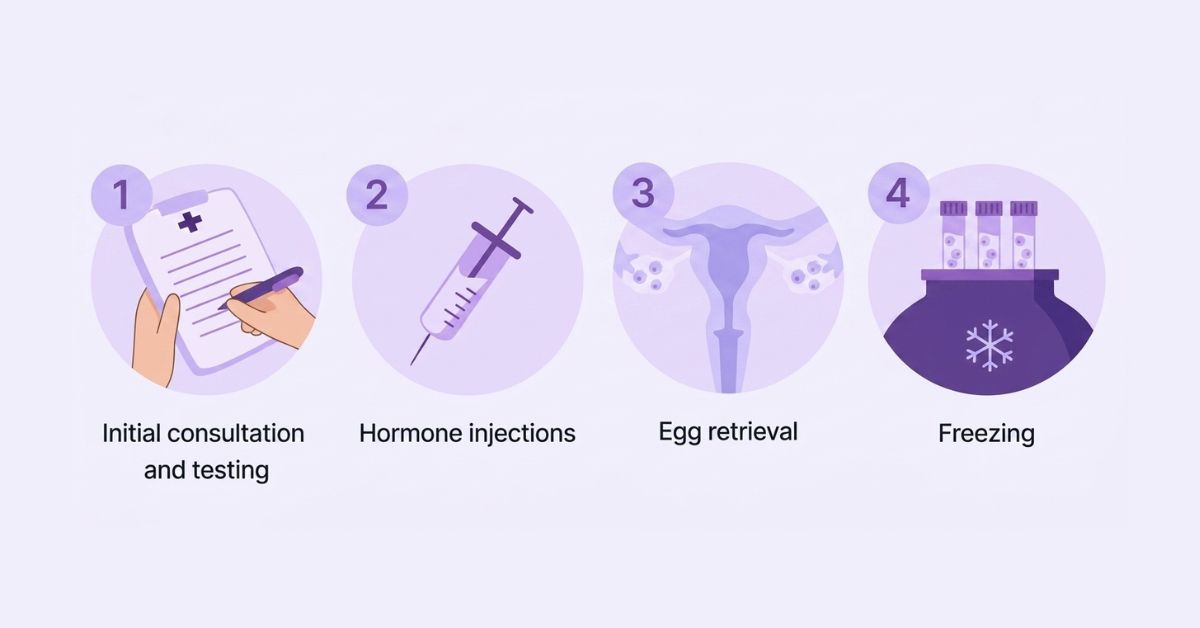
Egg freezing follows a similar process to the early stages of IVF, stopping before fertilization.
- Initial consultation and testing, including hormone levels and an ultrasound to assess ovarian reserve.
- Ovarian stimulation medication, taken over roughly one to two weeks to encourage multiple eggs to develop.
- Monitoring appointments, tracking follicle development through bloodwork and ultrasound.
- Egg retrieval, a brief outpatient procedure performed under sedation.
- Vitrification, the rapid-freezing process that preserves the retrieved eggs.
- Ongoing storage, with annual fees for as long as the eggs remain frozen.
Your care team can walk you through what this timeline looks like for your specific situation.
What to Know Before You Freeze: Using Your Eggs Later
This is the part of egg freezing that matters most and isn't always explained clearly upfront: freezing your eggs and being able to use them later through IVF are governed by different practices. Fertilizing eggs into embryos through IVF at a licensed Philippine clinic currently follows guidelines from the Philippine Society of Reproductive Medicine (PSRM), which limits IVF to legally married couples using their own eggs and sperm — a practice sometimes called homologous IVF.
In practical terms, this means a single woman can freeze her eggs now, but using them later through IVF at a Philippine clinic would currently require being legally married at that point, since donor sperm and IVF for unmarried individuals aren't offered through licensed clinics under current practice. This isn't set out in a specific national law — there's no dedicated Philippine statute directly regulating egg freezing or IVF — so what's described here reflects current clinic practice rather than a fixed legal rule that couldn't change. A bill addressing broader ART regulation has been introduced in Congress, so this picture is worth reconfirming with your clinic rather than assuming it's permanent.
If this timeline matters to your decision — for example, if you're freezing eggs without a clear expectation of when or whether you'll marry — it's worth discussing directly with your care team, and potentially a family law professional, before you begin.

Who Egg Freezing Is Typically Right For
Egg freezing tends to make sense for a specific set of circumstances, and understanding the future-use considerations above is part of deciding if it's right for you.
- Patients facing a medical treatment that could affect fertility, where preserving eggs before treatment is a time-sensitive decision.
- Patients who are married or planning to marry and want to preserve younger eggs for use later in their own timeline.
- Patients who want to preserve the option while being aware that using those eggs later currently depends on marital status under Philippine clinic practice.
- Patients open to using preserved eggs at a clinic outside the Philippines in the future, where different rules may apply, if that becomes relevant to their situation.
A consultation is the most reliable way to understand whether egg freezing fits your specific circumstances and timeline.

Egg Freezing at GenPrime Manila
Yes — GenPrime Fertility Manila offers egg freezing at our Parañaque clinic, and our team walks through both the process and the current practice considerations around future use as part of your consultation, not as an afterthought.
Because GenPrime operates as part of a wider network with clinics in Singapore, Bangkok, Kuala Lumpur, and Los Angeles, patients who may want to explore options beyond current Philippine clinic practice in the future have that conversation available to them as well.

FAQ Section
1. What age can I freeze my eggs in the Philippines?
Elective egg freezing is generally available to women aged 21 to 37. Medical egg freezing, for those facing a treatment that could affect fertility, typically has no age restriction.
2. Do I need to be married to freeze my eggs in the Philippines?
No. Egg freezing itself doesn't require being married, and single women can and do freeze their eggs at Philippine fertility clinics.
3. Can I use donor sperm with my frozen eggs later?
Under current practice at licensed Philippine clinics, IVF is limited to legally married couples using their own eggs and sperm, so donor sperm is not offered through mainstream clinics. This is based on current clinical practice guidelines, not a specific national law, and is worth confirming directly with your clinic.
4. How much does egg freezing cost in Manila?
GenPrime Fertility Manila lists an egg freezing package at ₱400,000, covering stimulation, retrieval, and vitrification. Ongoing annual storage fees are a separate cost.
5. If I'm single now, can I still use my frozen eggs if I marry later?
Generally, yes — under current practice, using your own frozen eggs through IVF with your spouse's sperm after marriage is consistent with the homologous IVF standard followed by licensed clinics.
6. Does GenPrime Manila offer egg freezing?
Yes. GenPrime Manila offers egg freezing at our Parañaque clinic, with a consultation that covers both the process and current practice considerations around future use.
Related Questions
How long can frozen eggs be stored in the Philippines?
This varies by clinic policy. Ask your clinic directly about storage duration limits, renewal terms, and what happens if fees lapse.
Is egg freezing covered by PhilHealth or insurance?
No. Egg freezing, like IVF, is not covered by PhilHealth or most private insurance in the Philippines and is typically a fully self-pay cost.
What happens to my eggs if regulations change in the future?
This isn't something a general guide can predict. If broader ART regulation is passed, your clinic would be the right source for how it affects existing stored eggs.
Can I freeze eggs in the Philippines and use them at a clinic in another country later?
This is a question worth discussing directly with your care team, since it depends on both Philippine clinic practice around releasing stored eggs and the receiving country's own regulations.
This article is for informational purposes only and does not constitute medical or legal advice. Current practice described here reflects PSRM ethical guidelines followed by licensed clinics, not a specific Philippine statute, and this landscape may change. Consult a licensed fertility specialist regarding your treatment options, and a family law professional regarding legal questions specific to your situation.
Sources: Philippine Society of Reproductive Medicine (PSRM) Ethical Guidelines on the Provision and Practice of Assisted Reproductive Technology; published academic and legal analysis of Philippine ART regulation; publicly reported GenPrime Manila pricing.